AutoCAD Drafting Articles
AutoCAD drafting articles may cover layers, xrefs, blocks, dimensions, title blocks, revision practices, file cleanup and preparation of drawing packages.
Useful technical content should help a reader make a decision, prepare a stronger project brief or avoid a preventable production problem. The CAD BIM engineering blog from CAD Conversion Services India focuses on practical drawing, conversion and model-development questions rather than repeating service-page descriptions.
Readers can explore AutoCAD drafting articles, Revit BIM guides, SolidWorks design insights and CAD conversion tips organised around the information project teams need before work begins. Each topic remains informational, with relevant service pages available when a reader needs qualified production support.
Our editorial approach combines offshore CAD experience with human technical review so articles remain useful to architects, engineers, contractors, manufacturers and asset-information teams.

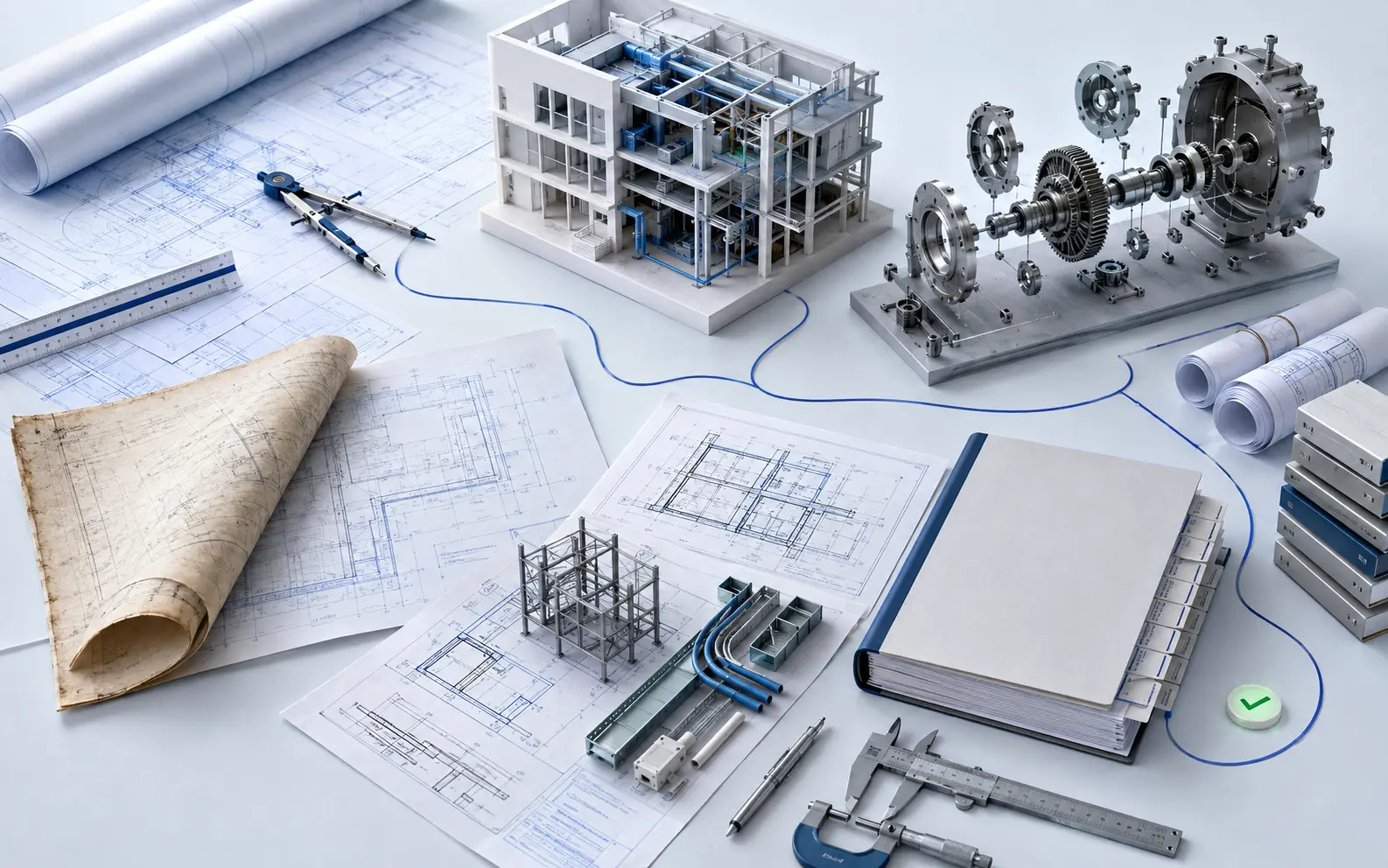
AutoCAD drafting articles may cover layers, xrefs, blocks, dimensions, title blocks, revision practices, file cleanup and preparation of drawing packages.
Revit BIM guides examine model purpose, LOD, parameters, worksets, coordinates, linked disciplines, family use, documentation and model-health considerations.
SolidWorks design insights address part and assembly structure, imported geometry, parametric modeling, sheet metal, weldments, configurations and manufacturing drawings.
CAD conversion tips explain the differences between vector extraction, manual redrawing, raster vectorisation, file migration and 2D-to-3D model development.
Architectural drafting resources, structural detailing articles and MEP BIM coordination guides focus on discipline-specific inputs, responsibilities and deliverables.
Engineering drawing standards and CAD outsourcing insights help buyers evaluate templates, checking processes, communication methods, scope boundaries and delivery models.
The blog is organised around related groups of topics rather than isolated keyword posts.
This cluster can include PDF-to-CAD preparation, scan assessment, raster conversion, legacy archive planning and checks for editable drawing outputs.
Readers can learn about layer standards, xref management, redline incorporation, templates, drawing cleanup and revision documentation.
Articles may examine architectural, structural and MEP models, model coordination, family creation, CAD-to-BIM conversion and BIM quality checking.
Topics can cover 2D-to-3D conversion, SolidWorks model structure, assemblies, fabrication drawings and neutral-format translation.
The CAD outsourcing blog can help readers prepare file samples, compare scopes, understand quotation factors and decide when to assign externally defined drawing work.
These clusters link readers to deeper articles without turning informational content into duplicated commercial landing pages.

Each article begins with a real production question, such as why an extracted PDF produces duplicate lines or why a Revit LOD label is not enough to define model content.
The editorial process may include:
This keeps qualified CAD drafting guides focused on usefulness instead of keyword density.
Use preparation guides to identify source files, deliverables, standards, software versions and likely clarification points before you assign externally a defined drawing or modeling package.
Share relevant CAD solution resources with design, engineering, procurement or document-control colleagues so the team uses the same terminology.
Articles can explain when automation is appropriate, when manual redrawing is necessary and which checks affect output usability.
CAD outsourcing insights can help clients structure review cycles, maintain revision control and separate drafting actions from design decisions.
Mechanical CAD tutorials, drawing-standard explanations and experienced BIM articles can support internal discussions without replacing software training or project-specific qualified advice.
AI may assist with topic classification, outline comparison, terminology checks and the organisation of reference notes. It can also help identify repeated questions across a large content library.
AI does not independently approve technical guidance or verify project-specific engineering decisions. A human reviewer evaluates the content, and an experienced checks discipline-sensitive explanations. This produces a more efficient editorial solution without transferring accountability to automated text generation.
Offshore CAD services insights should explain operational trade-offs rather than assume outsourcing is suitable for every task. Useful articles can examine:
Readers considering whether to assign externally engineering drawing articles or production packages can use these factors to form a more complete assessment.
The archive-planning articles helped our team understand why different source files needed different conversion scopes. We used the checklist during our internal review.
Amanda K., Engineering Records Lead, United States
The LOD guide explains the issue in practical terms. It gave our architects and BIM coordinators a better starting point for discussing deliverables.
Gabriel M., Digital Delivery Coordinator, Canada
The imported-geometry series clearly distinguishes file translation from parametric rebuilding. That difference is often missed in supplier conversations.
Johannes E., Mechanical Design Manager, Germany
It is written for architects, engineers, contractors, manufacturers, BIM teams, document controllers and buyers who need practical information about drawing and model production.
No. Articles provide general educational information. Project decisions should be based on the actual files, requirements and authorised qualified review.
Topics are selected from common production questions, service-page support needs, software workflows and information clients often need before defining a CAD or BIM assignment.
Yes. You can contact the team with a suggested topic or a project-related question. A service enquiry will be reviewed separately from general editorial feedback.
Explore the latest guides by software, discipline or production challenge. When a question relates to a live project, send representative files for a separate technical review.
Browse CAD and BIM Resources