Brief and Existing-Evidence Review
We examine requirements, sketches, models, reference products, component data, constraints and intended deliverables. Missing decisions and high-risk assumptions are identified.
Product development rarely follows a straight path from sketch to production. Requirements change, interfaces become clearer, prototypes expose practical problems and suppliers ask for manufacturing adjustments. Useful CAD support must preserve the reasoning behind those changes rather than producing disconnected models at each stage.
CAD Conversion Services India provides product design and development support services for manufacturers, start-ups, equipment businesses and engineering teams. We help translate developed requirements, approved concepts and test feedback into SolidWorks models, assemblies, drawings and documented revisions.
Our offshore team operates inside the client’s product-development process. We can explore authorised concepts, prepare CAD alternatives and incorporate approved feedback, while the client controls the product brief, engineering calculations, intellectual-property decisions, testing, compliance, safety and final release.

Confirm these essentials before production begins.
Sketches, legacy drawings, samples, measurements and approved engineering instructions
Parts, assemblies, production drawings, BOMs and agreed exchange files
SolidWorks, AutoCAD and agreed mechanical CAD formats
Focused production support for Product Design and Development Support, with scope, source authority and review responsibility agreed before work begins.
Early development may require simplified models that clarify proportions and component arrangement. Later stages may need controlled interfaces, native features, prototypes, supplier drawings and configuration-specific documentation.
Our capabilities can include:
The scope can begin at one stage and end at another. A concept model is not a released production definition, and a prototype drawing is not evidence that a product has passed verification or compliance testing.
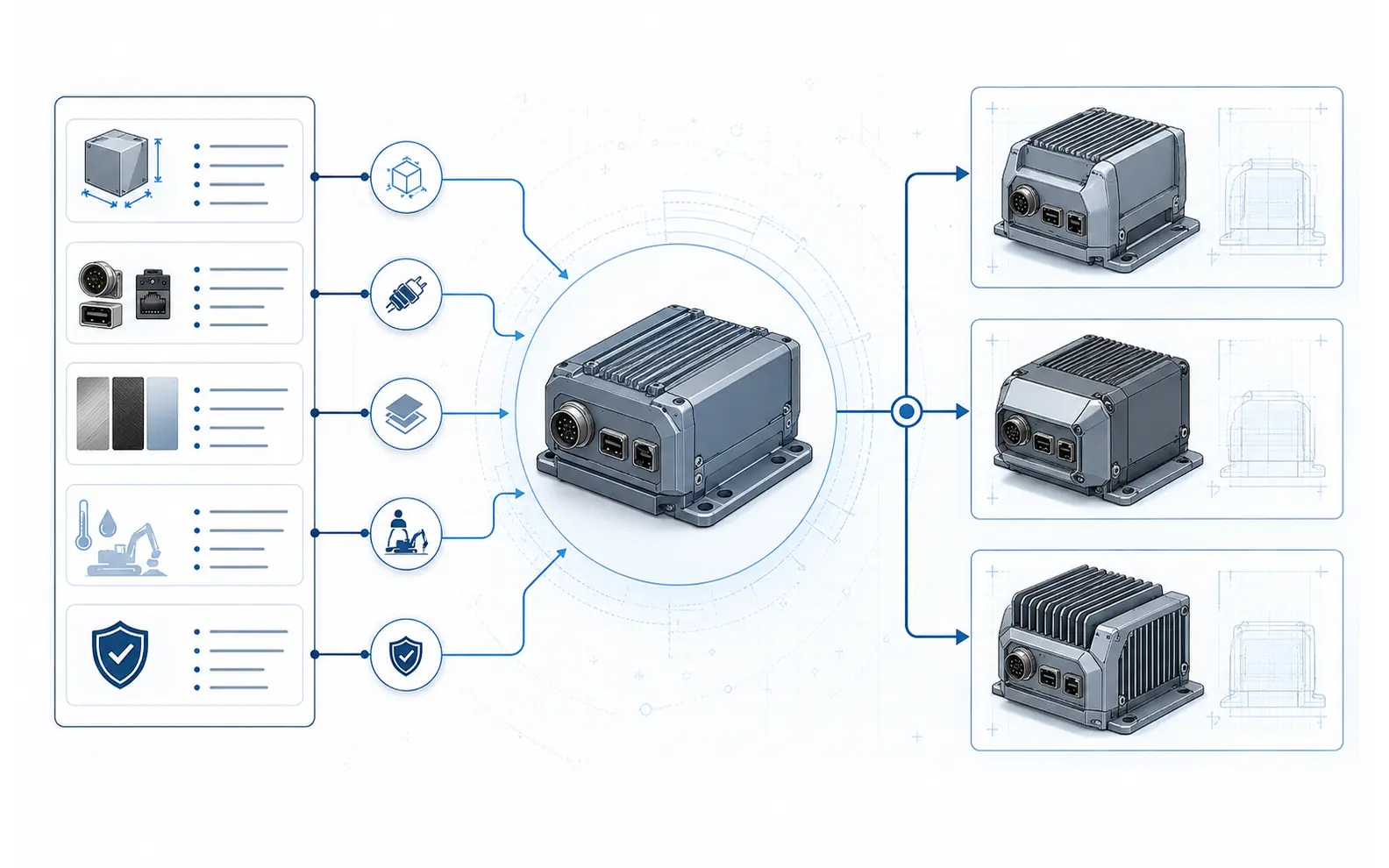
Concept to CAD development begins with a usable brief. Intended users, operating context, dimensions, interfaces, target materials, manufacturing assumptions, constraints and evaluation criteria should be identified as far as the project stage permits.
We can prepare agreed CAD directions, layouts or component arrangements for client comparison. An expert modeler records unresolved points and keeps speculative geometry distinct from approved requirements. Concepts are presented as development options rather than completed engineering decisions.
Where appearance influences the product, proportions and visible surfaces can be coordinated with the supplied industrial-design direction. Functional engineering, ergonomics, user safety and regulatory suitability require appropriate client review and testing.
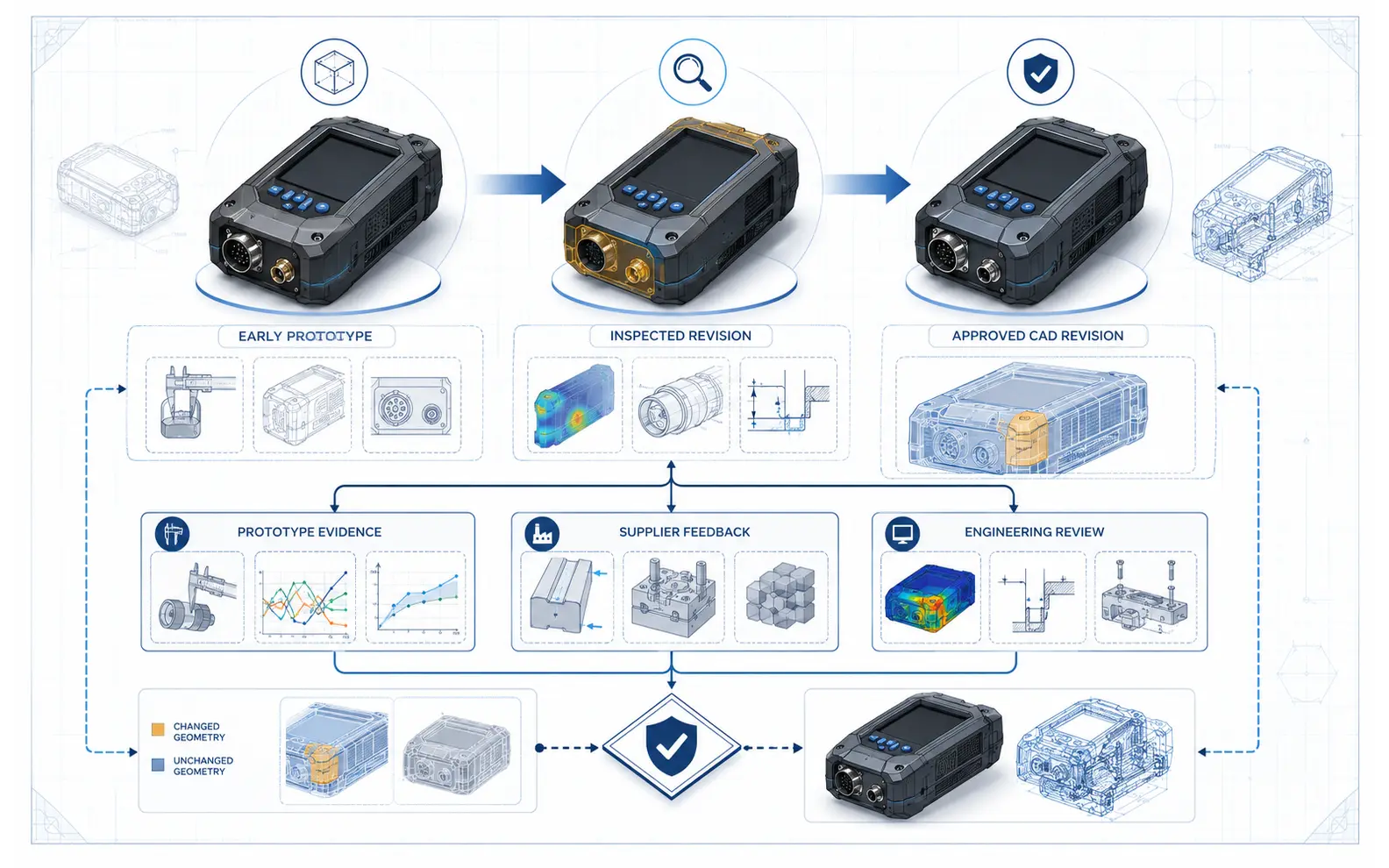
Design refinement services may incorporate client comments, prototype measurements, supplier feedback, interface changes or test observations. Each revision should identify what changed, why it changed and which authority approved it.
We maintain a query and change register so models do not drift through informal comments. A professional reviewer checks that approved changes reach the intended components, configurations and drawings without unintentionally altering unaffected areas.
For product families, refinement may include controlled variants, configurable parts or modular subassemblies. File structure is planned around expected ownership and release practice rather than short-term visual convenience.
A requirement register can link dimensions, interfaces, user needs and supplier constraints to the affected files. When a requirement changes, the team can identify which parts, assemblies and drawings need review. The register supports traceability but does not replace formal verification or validation planning.
Prototype design drawings can communicate dimensions, materials, assembly intent and supplier instructions appropriate to a development build. They should clearly show their revision and prototype status so they are not mistaken for final production documentation.
Prototype feedback may reveal fit, assembly, access, weight, strength, thermal or user-interaction issues. The client evaluates those findings and supplies authorised changes. We then update the CAD package and maintain traceability between the review input and revised output.
Product assembly development can include model hierarchy, purchased-component references, fastener positions, subassemblies, exploded views and drawing outputs. Mating strategy and file relationships are established according to client standards.
Enclosure product design can support housings, covers, panels and equipment cabinets around approved internal layouts. Requirements for ventilation, sealing, ingress protection, electrical separation, heat, impact, access and compliance must be supplied or confirmed by the client’s qualified specialists.
An expert coordinator checks identifiers, properties and interface references across the product package. A professional checker then compares models and drawings with the current requirements and authorised change record.
We examine requirements, sketches, models, reference products, component data, constraints and intended deliverables. Missing decisions and high-risk assumptions are identified.
The client selects the development direction and approves the planned level of detail, file structure, review criteria and submission stages.
Parts, surfaces, assemblies and drawings are created from authorised information. Queries and alternative directions remain clearly labelled.
Client comments, supplier findings and test observations are recorded. Approved revisions are implemented through controlled updates.
Native files, drawings, exchange formats and registers are checked and delivered for the agreed stage. The client controls verification, validation and release.
This structure supports product design and development support outsourcing services without confusing CAD assistance with unrestricted design authority.
AI-assisted tools may help classify requirements, compare revision notes, organise component data and generate early alternatives for human evaluation. They can reduce repetitive preparation and help teams explore defined options faster.
AI does not establish the product brief, verify safety, own intellectual property or approve an engineering change. Every useful output is reviewed by people who understand the requirements and project context. This is central to our professional product design and development support services.
A fixed assignment may cover concept CAD, one prototype stage, enclosure development, supplier updates or preparation of a controlled drawing set.
Companies can outsource product design and development support when internal engineers are occupied with testing, customer coordination, compliance or higher-priority technical decisions.
Outsourced product design and development support can manage recurring approved model revisions, product variants and drawing updates. A current requirements and change register preserves continuity.
As an expert product design and development support service provider, we recommend defining who approves requirements, supplier feedback and test-driven changes before CAD production begins.
We provide offshore product design and development support services for clients in the United States, Canada, European nations, the United Arab Emirates, Australia, South Africa, Singapore, Japan, Taiwan and India. Review timing, confidentiality, file transfer and intellectual-property handling are agreed during onboarding.
Some organisations outsource a defined modeling stage; others outsource selected documentation and engineering-change activities over a longer programme. Our role remains tied to the approved scope and named decision-makers.
The appropriate product design and development support solution depends on product maturity, requirements, technical risk, manufacturing route and validation plan. Businesses comparing a product design and development support solutions company India can provide should evaluate communication discipline, change control and the clarity of responsibility boundaries.
Prototype findings were converted into a clear second revision without losing the history of the original design. Unresolved sealing questions stayed with our engineering team.
George N., Hardware Development Manager, United Kingdom
The product family is now organised around common parts and approved configurations. Supplier comments were incorporated only after we confirmed the direction.
Sophie T., New Product Introduction Manager, Australia
The change queue works within our existing approval process. We can see which files were affected, what was updated and which questions still need an internal decision.
Brian K., Product Lifecycle Engineering Manager, United States
We can support defined CAD and documentation stages, but product release also requires engineering analysis, prototypes, testing, supplier validation, compliance and business decisions led by the client and its appointed specialists.
We can review CAD against agreed guidelines and incorporate documented supplier feedback. The selected manufacturer must validate process capability, tooling, materials, tolerances and production risk.
Yes. We can implement authorised test-driven changes, update affected drawings and maintain a revision record. The client evaluates test results and approves the engineering direction.
Confidentiality, NDA requirements, access permissions, file-transfer methods, retention and authorised contacts can be defined during onboarding before sensitive files are shared.
Share the existing brief, concept, model, prototype feedback or change notice together with the decisions already approved and the next required deliverable. We will review the material and recommend a suitable support workflow.
Request a Product Development Review